
Industry Application Series — Cosmetics & Personal Care Packaging
Three-Station Blow Molding Machine for Skincare Toner & Serum Bottles: Producing Premium PETG Cosmetic Packaging
The skincare packaging market is one of the most demanding environments in the entire plastic bottle manufacturing industry. A toner bottle sitting on a pharmacy shelf or appearing in a K-beauty brand’s product launch is not merely a functional container — it is an integral part of the product experience and brand identity. Consumers purchasing a premium serum at significant cost expect the bottle to be optically clear with glass-like clarity, dimensionally consistent enough for the precision pump mechanism to engage correctly every time, and chemically inert enough to preserve a sensitive formulation that may contain niacinamide, peptides, hyaluronic acid, or vitamin C derivatives.
Meeting these expectations at mass production scale, across tens of thousands of bottles per production run, is precisely what the Three-Station ISBM Machine from AUS isbmblowmolding Co., Ltd is designed to deliver. This article explains why PETG is the material of choice for premium toner and serum bottles, why the three-station one-step ISBM process is the most technically appropriate production method, and what cosmetic packaging manufacturers need to specify when evaluating the HGY50-V3-EV for their production lines.
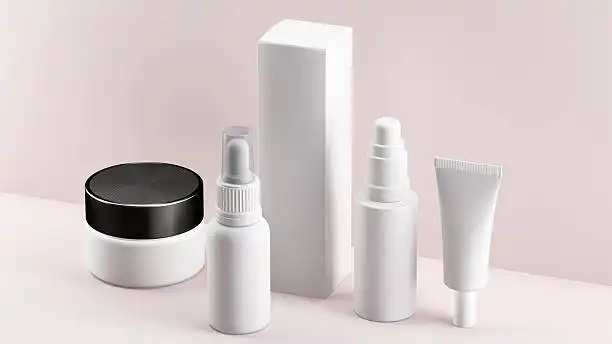
Why PETG Has Become the Premium Material for Toner and Serum Bottles
PETG — glycol-modified polyethylene terephthalate — has emerged over the past decade as the dominant material for premium skincare packaging applications that were previously served by glass or standard PET. Understanding why requires examining the specific performance requirements of toner and serum containers.
First, optical clarity. Premium skincare brands — particularly those competing in the K-beauty export market from South Korea, the European luxury beauty sector, and the fast-growing Australian natural skincare category — demand packaging that presents the formulation with glass-like transparency. Standard PET, while clear, can exhibit a slight haze or yellowish tint at thicker wall sections. PETG, due to its amorphous molecular structure, achieves significantly higher optical clarity across wall thicknesses from 0.3 mm to over 2.0 mm — enabling the thick-walled, glass-substitute bottles that luxury skincare brands require.
Second, chemical compatibility. Toner and serum formulations typically contain a range of active ingredients — acids (AHA, BHA, vitamin C), alcohols, and humectants — that can interact with the packaging material. PETG’s improved chemical resistance compared to standard PET, and its demonstrated non-reactivity with common cosmetic actives at room temperature, makes it a safe default material choice for formulators who need to minimise the risk of leaching or interaction over a product’s shelf life.
Third, impact resistance and brand durability. Bottles in the skincare category are handled repeatedly — opened, closed, placed on bathroom surfaces, potentially dropped. PETG’s improved impact strength over standard PET means premium toner bottles maintain their aesthetic appearance throughout a product’s use cycle rather than developing micro-cracks or crazing that would communicate poor product quality to the consumer.
Why One-Step Three-Station ISBM is the Correct Process for Luxury Skincare Bottles
Not all blow moulding processes are equally suited to producing the premium PETG toner and serum bottles that cosmetic brands require. The choice of production method has direct consequences for the visual quality of the finished bottle — and in premium skincare packaging, visual quality is the primary commercial criterion.
Zero Visible Parting Line
In extrusion blow moulding (EBM), the blow mould closes around an extruded plastic tube, inevitably leaving a visible parting line — a faint ridge — where the two mould halves meet. On a transparent or translucent skincare bottle, this parting line is clearly visible and communicates industrial rather than premium manufacturing quality. The ISBM process, by contrast, uses a preform that is blown inside a precision-machined blow mould. With mould mating surfaces held to ±0.02 mm tolerance, the parting line on an ISBM bottle is essentially invisible to the naked eye — producing the seamless appearance that premium cosmetic brands demand.
Crystal Optical Clarity from One-Step Processing
PETG’s amorphous nature means it is particularly sensitive to the thermal history it experiences during production. In a two-stage ISBM process, PETG preforms are cooled, stored, and reheated — a thermal cycle that can introduce crystallisation inhomogeneity and optical haze in the final bottle. The one-step three-station process of the HGY50-V3-EV maintains the PETG material in its optimal temperature window from injection through to the finished bottle, never allowing it to cool below the amorphous processing temperature. The result is a PETG bottle with the maximum achievable optical clarity for the material — the glass-clear finish that justifies premium positioning.
Precision Neck Finish for Pump and Sprayer Compatibility
Toner bottles are typically closed with either a flat screw cap (in the Korean toner-pad format), a fine mist sprayer, or a lotion pump — all of which require precise neck finish dimensions to achieve a leak-free, aesthetically flush closure engagement. The injection-stage neck formation of the ISBM process produces neck thread dimensions with injection-moulding precision, meaning the neck finish on every bottle in a production run is dimensionally consistent to within ±0.1 mm. This eliminates the closure engagement failures — pump heads that leak, sprayers that wobble — that arise from neck finish variation in other blow moulding processes.
Market Context: K-Beauty, Australian Skincare, and European Premium Packaging
🇰🇷 South Korea — K-Beauty Export
Korean cosmetic brands exporting globally require zero-parting-line PETG bottles with glass-like clarity to communicate premium positioning. The HGY50-V3-EV’s precision mould tolerance meets the K-beauty brand aesthetic standard.
🇦🇺 Australia — Natural Skincare
The Australian premium natural skincare sector is growing rapidly, with brands requiring sustainable, recyclable PET/PETG packaging. ISBM-produced PETG bottles support both aesthetic and recyclability commitments.
🇳🇱 Netherlands / EU — Luxury Beauty
EU cosmetic brands face increasing sustainability regulation (PPWR). PETG ISBM bottles produced without hydraulic oil contamination and with minimal energy waste align with EU green packaging mandates.
🇧🇷 Brazil — Growing Beauty Market
Brazil is one of the world’s largest beauty markets. Local cosmetic manufacturers investing in in-house ISBM production reduce dependency on imported bottles and improve supply chain resilience for a highly price-competitive sector.
Production Range: Typical Toner and Serum Bottle Formats on the HGY50-V3-EV
The HGY50-V3-EV produces toner and serum bottles across the standard cosmetic packaging volume range with high consistency. The following formats are regularly produced on three-station ISBM machines in cosmetic packaging manufacturing facilities globally:
- Mini/travel toner (30 – 50 ml): Small-format PETG round or oval bottles for airline retail and travel sets. High cavity count per cycle (up to 6) delivers efficient production economics despite small bottle size.
- Standard toner (100 – 150 ml): The core toner bottle format. PETG round bottle with 24/410 or 28/410 neck finish for lotion pump or mist sprayer closure. Crystal clarity, uniform wall thickness.
- Serum concentrate (20 – 50 ml): Small-format thick-walled PETG bottles for premium serum products. Thick walls achievable through mould design combined with PETG material selection.
- Essence/treatment water (200 – 500 ml): Larger format Korean essence bottles and toning water bottles. Round body with fine mist sprayer neck finish.
- Refillable skincare bottles (100 – 300 ml): Thicker-wall PETG bottles designed for multiple refill cycles, in response to European PPWR sustainability requirements.
Energy Efficiency and Sustainability: PETG ISBM vs. Glass Bottles
One of the most significant trends in cosmetic packaging over the past five years is the shift away from glass towards high-clarity plastic alternatives — driven by sustainability, logistics cost, and consumer safety considerations. PETG ISBM bottles produced on the HGY50-V3-EV offer a compelling environmental profile compared to glass:
- Weight: A 100 ml PETG toner bottle weighs approximately 18–25 g compared to 80–120 g for an equivalent glass bottle — reducing shipping carbon footprint by 60–70% per unit.
- Energy: Glass manufacturing requires furnace temperatures above 1,400°C. PETG ISBM processing runs at 240–280°C with the additional efficiency advantage of eliminating the reheat oven entirely.
- Recyclability: PETG is technically recyclable through specialist streams, and the one-step production process minimises contamination that can complicate recycling. The machine itself, running at 45.2 kW total installed power, is among the most energy-efficient platforms for cosmetic bottle production at this output scale.
- Breakage: Zero glass breakage during filling, logistics, or retail — a common source of product loss and safety risk eliminated entirely.
Produce Glass-Quality PETG Skincare Bottles with ISBM
Share your toner or serum bottle design — dimensions, neck finish, wall thickness target, volume — and our team will confirm machine suitability and provide a cavity count and output estimate within 24 hours.
Frequently Asked Questions
editor:WM