
Industry Application Series — Pharmaceutical & Medical Packaging
Three-Station Blow Molding Machine for Pharmaceutical Liquid Bottles: Oral Liquid, Syrup & Eye Drop Packaging
In pharmaceutical packaging, there is almost no room for error. A bottle that fails to seal correctly, presents inconsistent wall thickness, or carries invisible microbial contamination can compromise drug efficacy, trigger regulatory action, and put patients at risk. For manufacturers producing oral liquid bottles, syrup bottles, and eye drop containers at industrial scale, the choice of production technology is not merely a procurement decision — it is a quality assurance commitment that reaches all the way to the end patient.
The دستگاه قالب گیری ضربه ای سه ایستگاهه from AUS isbmblowmolding Co., Ltd — represented by the HGY50-V3-EV model — has become a preferred production platform for pharmaceutical packaging lines worldwide. This article examines why the three-station one-step ISBM (Injection Stretch Blow Molding) process is specifically well-suited to pharmaceutical liquid bottle production, and what manufacturers in Australia, the UK, the Netherlands, and other regulated markets need to understand before specifying this equipment.
Why Pharmaceutical Liquid Packaging Demands One-Step ISBM
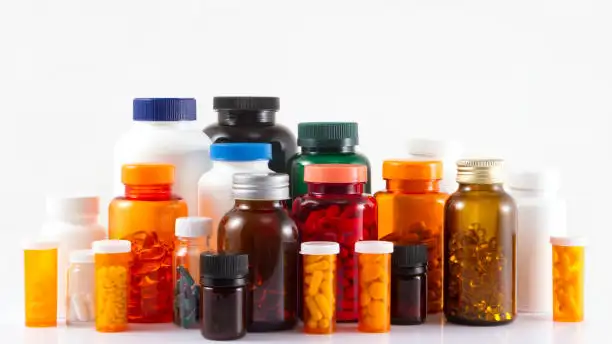
Pharmaceutical liquid bottles — including 30 ml oral solution bottles, 100 ml syrup bottles, and small-volume ophthalmic dropper containers — share three non-negotiable production requirements: dimensional precision at the neck and thread finish, uniform wall thickness across the entire bottle body, and a contamination-controlled production environment compliant with GMP (Good Manufacturing Practice) standards.
Traditional two-stage blow molding processes, where preforms are injection-moulded in one machine, cooled, stored, transported, and then reheated in a separate blow moulding machine, introduce multiple contamination and quality risk points. Every handling step between the injection stage and the blow stage is an opportunity for particulate deposition, moisture absorption, and dimensional distortion due to uneven reheating. For non-critical consumer bottles, this is acceptable. For pharmaceutical liquid packaging, it is not.
The one-step three-station process of the HGY50-V3-EV eliminates every one of these intermediate steps. Plastic resin — typically PET or PETG of pharmaceutical grade — enters the injection station, is moulded into a preform, rotates 120° to the stretch-blow station while retaining its injection heat, is simultaneously stretched axially and blown radially into the final bottle shape, then rotates another 120° to the ejection station. The entire sequence occurs within a single sealed machine environment, with no intermediate handling, no reheating oven, and no exposure to factory atmosphere between process stages.
The result is a bottle produced in a closed-loop, parameter-controlled environment — precisely the kind of process traceability that GMP auditors and regulatory bodies such as the Australian TGA, UK MHRA, and the Netherlands’ MEB require for drug packaging validation.
Specific Bottle Types and Their Production Requirements
Oral Liquid and Syrup Bottles (30 ml – 500 ml)
Oral liquid and syrup formulations — paediatric antibiotics, antitussives, vitamin supplements — are typically packaged in PET bottles ranging from 30 ml to 500 ml. These bottles require a precision-moulded 28 mm or 38 mm neck finish to accept child-resistant closures and dosing cup adapters. Wall thickness variation must remain within ±0.05 mm across the bottle body to ensure consistent product barrier performance and to prevent premature cracking during transportation.
The five-servo-system configuration of the HGY50-V3-EV (using Inovance/MiRLE servo drives) delivers the injection pressure consistency and mould clamping stability required to maintain these tight tolerances across multi-cavity production runs of six bottles per cycle. The PLC-controlled process parameters — injection temperature, stretch rod speed, blow air pressure, and cooling duration — are logged digitally and can be exported for batch record documentation, directly supporting pharmaceutical manufacturers’ GMP documentation requirements.
Eye Drop and Ophthalmic Solution Bottles (5 ml – 30 ml)
Ophthalmic packaging represents perhaps the most demanding sub-category within pharmaceutical liquid bottles. Eye drop bottles must combine a precisely moulded dropper neck (typically 13 mm or 18 mm finish) with a body transparent enough to allow volume verification, walls thin enough to allow squeeze dispensing, yet structurally intact enough to withstand the sterilisation cycles used in ophthalmology filling lines.
PETG is frequently specified for ophthalmic bottles because it offers the glass-like optical clarity required for product visibility, chemical resistance to the aqueous formulations and preservatives used in eye drops, and sufficient flexibility for squeeze dispensing without stress whitening. The HGY50-V3-EV’s ability to process both PET and PETG on the same platform — switching between materials via screw and temperature profile changes — gives pharmaceutical manufacturers production flexibility without requiring a second machine investment.
Key Technical Advantages for Pharmaceutical Applications
Zero Flash, Zero Trimming
The injection blow process produces a fully finished neck with no flash waste and no secondary trimming operation, eliminating a major particulate contamination risk in cleanroom environments.
Uniform Wall Thickness
Biaxial molecular orientation during the stretch-blow stage produces consistent wall thickness distribution, critical for maintaining drug barrier properties and meeting container specification requirements in pharmacopoeial testing.
GMP-Compatible Process Control
Inovance PLC with HMI touchscreen logs all critical process parameters. Data export capability supports pharmaceutical batch record documentation and regulatory audit readiness.
No Hydraulic Oil Contamination
The all-electric servo drive configuration (EV model) eliminates hydraulic oil from the machine, removing a significant contamination risk in pharmaceutical production environments and facilitating ISO cleanroom integration.
Regulatory Compliance Context for Key Markets
Pharmaceutical packaging manufacturers operating across different geographies must align their production equipment and processes with local regulatory frameworks. The one-step ISBM process offers a documentation and process control architecture that maps well to the most common international standards.
- Australia (TGA): TGA’s Code of GMP for medicinal products requires documented process validation for primary packaging. The HGY50-V3-EV’s parameter logging and PLC-based process control provides the production data infrastructure required for process validation protocols under the Australian Code of GMP.
- United Kingdom (MHRA): Post-Brexit, UK MHRA operates its own GMP framework aligned with EU GMP Annex 1 for sterile product packaging. The closed-environment one-step process, combined with all-servo operation, positions the machine well for MHRA-inspected facilities producing non-sterile liquid medicines.
- Netherlands / EU (EMA): EU GMP Annex 1 (revised 2022) places increased emphasis on contamination control strategy (CCS). The integrated single-machine process, with its minimal open transfer steps, is inherently aligned with modern CCS principles for pharmaceutical packaging equipment.
- Brazil (ANVISA): ANVISA’s RDC 301/2019 governs pharmaceutical manufacturer GMP certification in Brazil. ISBM equipment with full parameter recording and servo-based repeatability supports ANVISA audit requirements for container manufacturing process documentation.
Energy Efficiency and Production Economics
Beyond compliance and quality, pharmaceutical packaging manufacturers operate under the same cost pressure as any industrial producer. The HGY50-V3-EV delivers measurable operational cost advantages that compound over time at production scale.
By eliminating the infrared reheating oven that is standard in two-stage blow moulding systems, the one-step three-station process reduces per-bottle energy consumption by 25–40% compared to equivalent two-stage production. For a pharmaceutical packaging facility running 20 hours per day producing oral solution bottles, this translates to tens of thousands of kilowatt-hours saved annually per production line — a significant contribution to both operating cost reduction and the facility’s ESG reporting commitments.
The compact machine footprint of 3,800 mm × 1,200 mm × 2,500 mm also reduces the cleanroom floor area required per line, which in pharmaceutical facilities represents a substantial capital cost saving given the expense of constructing and maintaining ISO-classified cleanroom space.
Practical Considerations When Specifying ISBM for Pharmaceutical Liquid Bottles
Pharmaceutical packaging engineers evaluating three-station ISBM machines for liquid bottle production should address the following specification questions during the equipment selection process:
- Material grade: Confirm that the machine screw and barrel configuration is appropriate for pharmaceutical-grade PET (IV 0.72–0.80 dl/g) or PETG as specified. Resin drying requirements should be reviewed with the machine supplier.
- Cavity count and output: The HGY50-V3-EV supports up to six cavities per cycle. For a 100 ml syrup bottle at a 15-second cycle time, six cavities yield approximately 1,440 bottles per hour — sufficient for most mid-scale pharmaceutical filling lines.
- Mould compatibility: Verify that bottle neck dimensions, body geometry, and weight range are within the machine’s mould clamping force envelope (injection: 50 KN; blowing: 315 KN).
- Downstream integration: One-step ISBM output can feed directly into filling, inspection, and capping lines. Confirm mechanical arm or conveyor interface compatibility with your existing downstream equipment.
Ready to Specify Your Pharmaceutical Bottle Production Line?
Our engineering team can review your bottle specifications, cavity requirements, and GMP documentation needs, and return a tailored equipment proposal within 24 hours.
Frequently Asked Questions
editor:WM