
4-Station ISBM for Edible Oil PET Bottles: 500ml–2L Guide
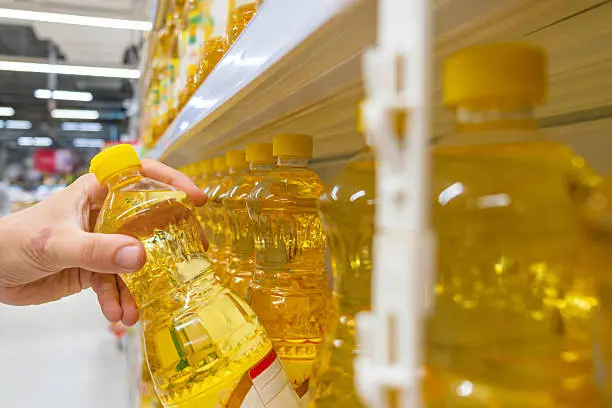
Edible oil packaging has undergone a sustained shift from glass and HDPE to PET over the past two decades, driven by PET’s combination of clarity (consumers prefer to see the oil’s colour and quality), light weight, recyclability, and excellent resistance to vegetable, seed, and specialty cooking oils. In 2024, PET edible oil bottles accounted for more than 40% of global volume in the 500ml–2L segment, with the largest growth occurring in Asia-Pacific, the Middle East, and Australia. For filling factories and oil brands looking to bring bottle production in-house or to upgrade existing lines, understanding how to configure a 4-station ISBM machine for edible oil PET bottle production is a commercially important decision.
Why 4-Station ISBM Is the Preferred Architecture for Edible Oil Bottles
The 500ml–2L edible oil bottle range presents specific technical challenges that make the four-station ISBM architecture significantly more suitable than the three-station alternative for most production scenarios.
Thermal Management in the Conditioning Station
Edible oil bottles — particularly in 1L and 2L formats — require substantial preform weight (typically 28g–75g for these volumes). Heavier preforms carry significantly more thermal mass from the injection station. In a three-station machine, the combined conditioning and stretch-blow station must handle this thermal inertia in a single, time-compressed step. The result is often uneven temperature distribution in the preform body, manifesting as pearlescence (whitening), uneven wall thickness, or insufficient crystallinity in the base panel — all cosmetically and structurally unacceptable for commercial edible oil packaging.
The four-station design solves this by dedicating an entire station to thermal conditioning. Infrared or contact heating elements bring the preform body to a precisely controlled stretch temperature (typically 95°C–115°C for PET edible oil bottles) across its full height, while the neck area is cooled to preserve thread integrity. This thermal decoupling is the critical enabler for consistent, high-quality 2L oil bottle production.
Handle Integration and Complex Geometries
Many edible oil bottles in the 1L–2L range incorporate an integrated handle — a significant geometry complexity that requires careful mold design and process control. Handle blow-out — where the handle panel fails to form completely against the mold cavity — is a common defect on under-specified machines. The four-station machine’s superior thermal conditioning and higher available blow pressure (typically 30–40 bar) support complete handle cavity filling. For manufacturers requiring handle-bottle integration without secondary operations, this is a key advantage of the four-station configuration.
PET Grade Selection for Edible Oil Bottles
Not all PET grades perform equally in edible oil contact service. The key selection criteria are:
- Intrinsic Viscosity (IV): 0.80–0.86 dl/g is the standard range for edible oil bottles. Higher IV supports better impact resistance and top-load strength, important for bottles that will be stacked during distribution.
- Acetaldehyde (AA) content: Should be below 5 ppm for food contact; low-AA grades (below 1 ppm) are preferred for premium oil brands where taste sensitivity is a concern.
- UV stabilization: Some specialty oils (olive oil, for example) benefit from UV-blocking PET or from label coverage that excludes light from the container; UV-stabilised PET grades with yellowish tinting are available for this application.
- Moisture content at processing: PET must be dried to below 50 ppm moisture before injection; inadequate drying causes hydrolytic degradation, reducing IV and generating acetaldehyde. A dedicated crystalliser/dryer rated for 4–6 hour residence time at 165°C is standard practice on edible oil ISBM lines.
Machine Specifications for 500ml–2L Oil Bottle Production
The following table provides a practical specification guide for edible oil bottle production across the key size ranges on a 4-station ISBM platform.
| Bottle Volume | Preform Weight | Cavities | Cycle Time | Hourly Output |
|---|---|---|---|---|
| 500ml | 28–34g | 4–6 | 12–16 sec | 900–1,800 pcs |
| 750ml | 38–46g | 4 | 14–18 sec | 800–1,028 pcs |
| 1 Litre | 46–60g | 2–4 | 16–22 sec | 327–900 pcs |
| 2 Litres | 62–80g | 2 | 20–28 sec | 257–360 pcs |
The four-station blow molding machine range covers the full spectrum of these production requirements, with models featuring injection clamping forces from 150 kN to 300 kN to accommodate the range of preform weights encountered across the 500ml–2L edible oil bottle portfolio.
Filling Line Integration: What the Bottle Must Deliver
Edible oil ISBM bottles destined for high-speed filling lines face specific performance requirements that must be designed into the bottle and process specification from the outset.
- Top-load strength: Stacked pallets of filled oil bottles impose significant compressive loads on the containers. A 1L PET edible oil bottle typically requires a minimum top-load of 120N–160N to survive distribution without panelling or deformation.
- Vacuum resistance: Hot-fill and pasteurised oil products create a vacuum in the headspace as they cool. Bottles for these applications require vacuum panels designed into the label panel area to absorb the pressure differential without uncontrolled deformation.
- Dimensional consistency for capping: Filling lines running at 200–400 bottles per minute require neck finish dimensions (diameter, thread pitch, ovality) within ±0.1mm across all cavities to avoid capper jamming and line stoppages.
- Base integrity: The petaloid or champagne base must withstand drop testing per standard ASTM D2463 — typically a 1.8m drop from the worst-case orientation — without base failure.
Colour and Label Compatibility
Clear, natural PET is the most common choice for premium olive oil and specialty cooking oils where product colour is a selling point. For commodity vegetable, sunflower, and canola oils, coloured PET (green, amber, or opaque white) is often used. ISBM machines can process masterbatch-dosed PET without difficulty, but colorant dosing systems must be accurately calibrated — colour variation between cavities is commercially unacceptable on retail shelf-ready bottles.
Sleeve labelling and pressure-sensitive labels are both widely used in the edible oil category. The bottle’s side wall profile must be designed to accept sleeve labels without wrinkling and to provide adequate labelling surface area for regulatory compliance — Australian FSANZ mandatory nutrition panel area requirements must be met on every finished bottle format.
Energy Efficiency and Sustainability in Edible Oil Bottle Production
The one-step ISBM process offers a significant sustainability advantage over two-stage production for edible oil bottles. The residual heat from the injection stage is utilised directly in the conditioning and blowing stages, eliminating the energy-intensive reheating step required in two-stage processing. For a typical 1L edible oil bottle line running 500 bottles per hour, the one-step approach typically consumes 20–35% less electrical energy per bottle than the equivalent two-stage line. With Australian industrial electricity prices in 2026 averaging above AUD 0.14/kWh in eastern states, this energy differential has a measurable impact on the cost per bottle.
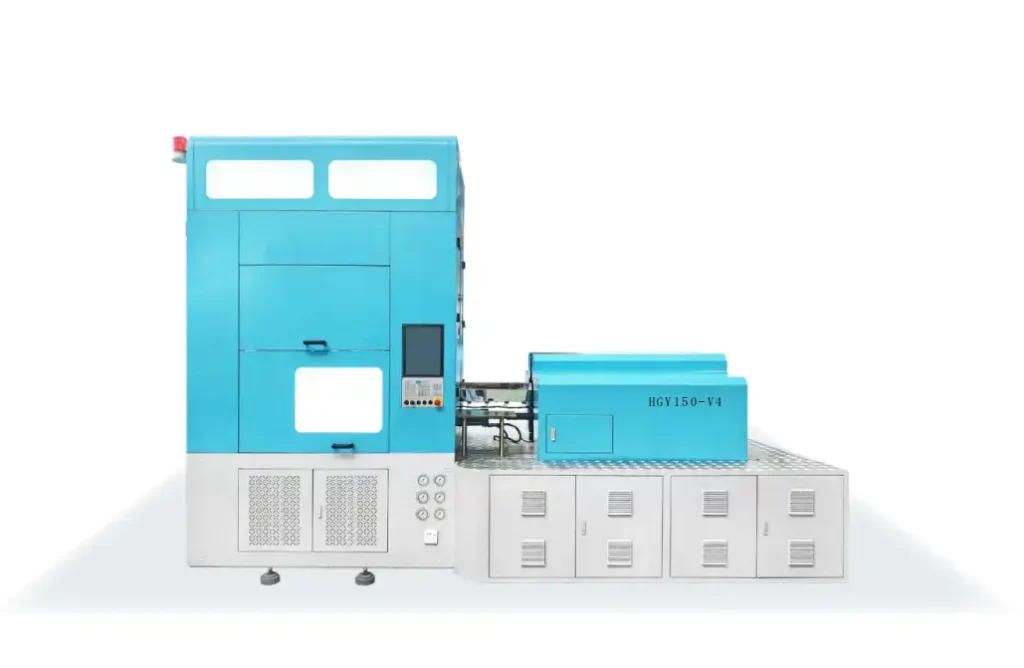
The HGYS200-V4 four-station one-step ISBM machine features three servo pump systems totalling 59.2 kW of installed power, delivering the output rates needed for commercial edible oil bottle production with an energy footprint optimised for competitive cost-per-bottle economics.
For filling factories and oil brands evaluating in-house bottle production, the four-station ISBM platform represents the optimal combination of output rate, wall-thickness consistency, and flexibility across the 500ml–2L size range. The capital investment is typically recovered within 18–30 months based on avoided bottle purchase costs at commercial production volumes.
editor:WM