Opis
ZQ60 注塑吹塑机 — 锁模力 600 kN,全欧式框架
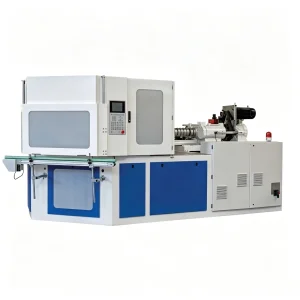
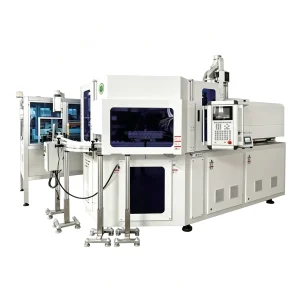
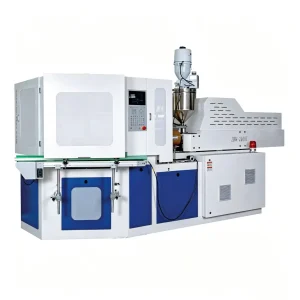
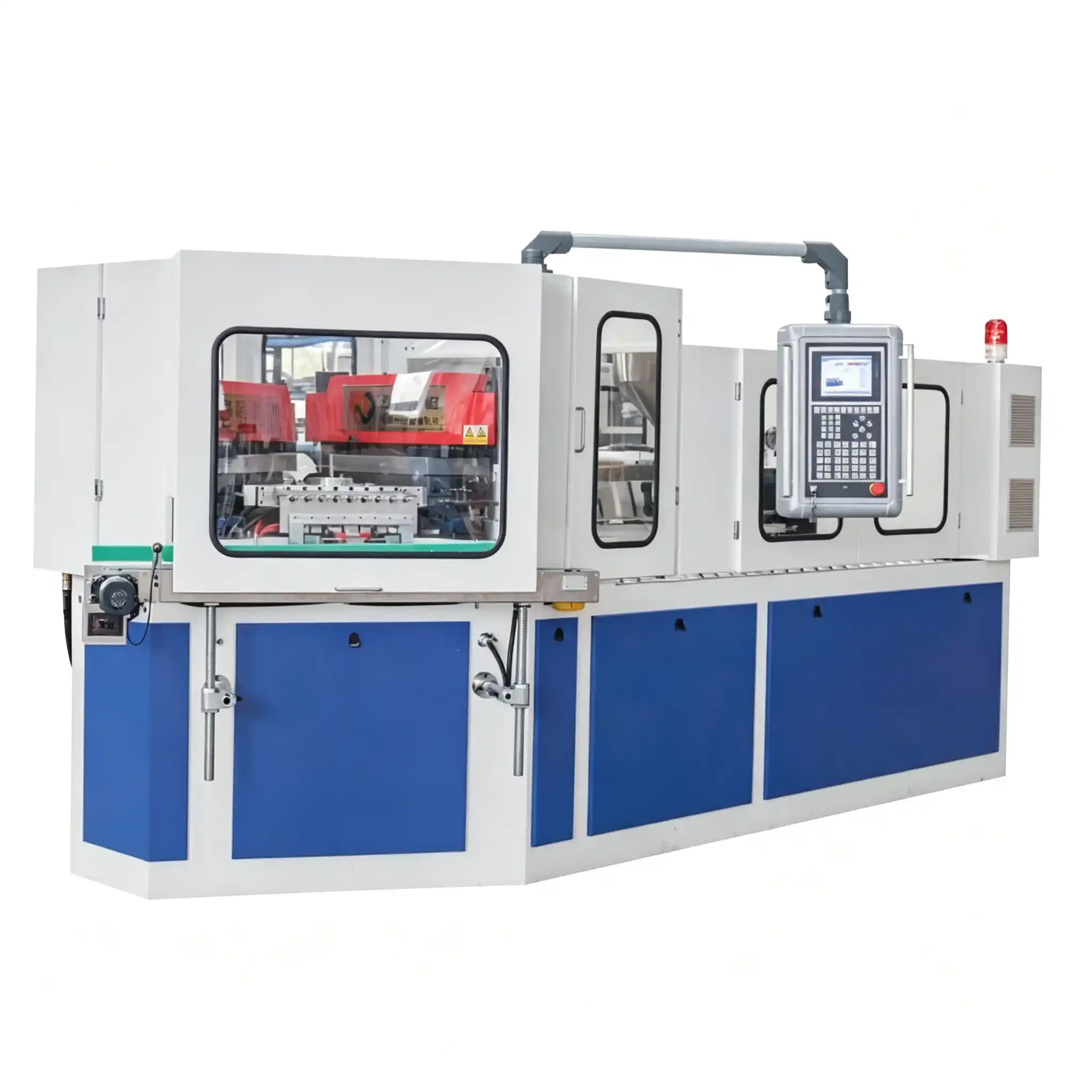
The ZQ60 injection blow molding machine is a single-station, three-station IBM injection blow molding machine with a full European frame design and an injection clamping force of up to 600 kN. It ranks first among the five similar products reviewed on this page. It integrates the injection molding, blow molding and ejection processes into a continuous cycle, without any secondary trimming, to produce precisely dimensioned, flash-free hollow plastic containers in bottle heights ranging from 10 ml to 2000 mm. The ZQ60 injection blow molding machine, with a 4-second dry cycle time and 37 kW total installed power (operating at 52%–70% load), is designed for multi-shift pharmaceutical, cosmetic and food packaging operations that require high throughput at low energy costs.
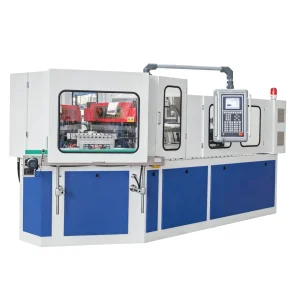
Two screw diameters are available – 45mm and 50mm – corresponding to injection molding weights of 260g and 383g respectively, with an aspect ratio of 22:1. It adopts a 3+N barrel heating zone configuration (14kW), which can achieve uniform plasticization of materials such as PP, HDPE, LDPE, PET, PC, PS, SAN, PMMA and PETG. The 600 x 390 mm platen supports 14 cavities for the 10 ml format, and can be reduced to 2 cavities for the 1000 ml format – making the ZQ60 ideal for Canadian packaging manufacturers looking for a high-tonnage injection blow molding machine to replace similar products imported from the United States, Taiwan or South Korea.
Key Features of ZQ60 IBM Injection Blow Molding Machine
600 kN Injection Clamping Force – Highest in its class: Compared to the four reference models reviewed on this page, the ZQ60 boasts superior clamping force: 30% higher than the Jomar IBM65 (460 kN), 20% higher than the BLOMA IBM50 (500 kN), and 3.4% higher than the SUMA 65iB (580 kN). Higher clamping force means less mold deformation under injection pressure, reduced flash between cycles, and sufficient structural margin to enable consistent part quality in multi-cavity injection configurations throughout the shift.
Full European Frame Construction: The fixture and platen assemblies are manufactured entirely to European structural standards, not in isolated sections. This affects tie rod alignment accuracy, platen parallelism under load, and long-term dimensional stability under the thermal cycling conditions common in 24-hour continuous production environments.
Standard Servo Rotary Indexing Table: This rotary indexing table is standard and requires no upgrades. Compared to pneumatic or cam-type indexing tables, servo indexing offers repeatable positioning accuracy, lower rotational wear, and simpler field maintenance—advantages that accumulate significantly over millions of cycles of production equipment annually.
Utilizing a pressure-locking system, the pressure cylinder is separated from the opening/closing stroke: the pressure cylinder operates only during the locking phase of the cycle. The mold opening and closing motion is entirely controlled by the master cylinder. This means the hydraulic system operates at full pressure only when needed, achieving 52%–70% power utilization at a total installed power of 37 kW, resulting in 10%–20% energy savings compared to traditional full-stroke pressure designs.
4-second hydraulic drying cycle: The ZQ60 achieves a 4-second drying cycle, enabling competitive throughput on short-cycle pharmaceutical vials, eye drop bottles, and cosmetic container production lines where cycle time directly determines the hourly output per cavity.
Twin-screw diameter – 45mm/50mm: Injection weights are 260g and 383g respectively, with a length-to-diameter ratio of 22:1, barrel heating power of 14kW, and 3+N zone heating. The 50mm/383g configuration is suitable for larger containers and higher viscosity engineering resins, including PC and high-density HDPE, without the need for separate screw replacements during changeovers. For users evaluating the ZQ60 as an injection/blow molding machine for pharmaceutical packaging, the wider screw size option expands the material range without additional equipment.
Up to 14 10ml capacity cavities – the highest number of cavities in its class for a small form factor: The 600 × 390mm platen supports 14 cavities for 10ml containers – compared to the 620 × 400mm platen of the SUMA 65iB and the 620 × 430mm platen of the BLOMA IBM50. The ZQ60 achieves such a high cavity capacity within a footprint of 3.8 × 1.4 × 1.8 meters and a net weight of 5 tons. For Canadian packaging companies producing large volumes of pharmaceutical vials or cosmetic sample bottles, a capacity of 14 cavities per cycle with a 4-second dry pressing time is considerable.
Zero-waste neck forming: The IBM process completes neck and thread forming at the injection molding station. No flash trimming or waste disposal is required—thus avoiding material loss and secondary handling labor associated with each run of the extrusion blow molding line. For Canadian food-grade and pharmaceutical applications, GMP regulations require material traceability documentation, and zero-waste also simplifies batch recording.
“`html
ZQ60 Technical Specifications
| Parameter | Unit | ZQ60 Value |
|---|---|---|
| Injection System | ||
| Screw Diameter | mm | 45 / 50 |
| Screw L/D Ratio | — | 22:1 |
| Injection Weight | g | 260 / 383 |
| Heating Power | kW | 14 |
| Number of Barrel Heating Zones | — | 3 + N |
| Injection Stroke | mm | 160 |
| Clamping System | ||
| Injection Clamping Force | kN | 600 |
| Opening Stroke (Injection) | mm | 140 |
| Blow Clamping Force | kN | 100 |
| Opening Stroke (Blow Mould) | mm | 140 |
| Rotary Table Lifting Height | mm | 70 |
| Mould | ||
| Max. Platen Size (L × W) | mm | 600 × 390 |
| Mould Thickness | mm | 240 |
| Max. Bottle Diameter | mm | 120 |
| Max. Bottle Height | mm | 220 |
| Applicable Bottle Capacity Range | mL | 1 – 2,000 |
| Ejection Stroke | mm | 230 |
| Hydraulic System | ||
| Hydraulic Pressure | MPa | 14 |
| Motor Power | kW | 18.5 / 22 |
| Dry Cycle | s | 4 |
| Total Power | kW | 37 |
| Operating Power | % | 52 – 70 |
| Others | ||
| Min. Compressed Air Pressure | MPa | 0.7 – 1.2 |
| Compressed Air Capacity | m³/min | 0.7 |
| Water Flowage | m³/h | 4 |
| Cooling Water Pressure | MPa | 0.3 – 0.4 |
| Machine Dimensions (L × W × H) | m | 3.8 × 1.4 × 1.8 |
| Net Weight | Ton | 5 |
ZQ60 vs. Comparable Injection Blow Molding Machines — Model Selection Reference
The models listed below are from other brands and are provided solely for buyer reference and model selection assistance. ZI-QIANG does not manufacture, sell, or service any third-party equipment. All third-party model names and brand names are trademarks of their respective owners.
| Parameter | ZQ60 ZI-QIANG · China |
IBM65 Jomar · USA |
65iB SUMA · Taiwan |
UIB90 Uniloy · USA |
IBM50 BLOMA · Korea |
|---|---|---|---|---|---|
| Screw Diameter (mm) | 45 / 50 | 45 | 40 / 50 | — | 50 |
| Injection Weight (g) | 260 / 383 | 205 | 169 / 264 | — | 240 |
| Injection Clamping Force (kN) | 600 | 460 | 580 | — | 500 |
| Mould Platen Size (mm) | 600 × 390 | 432 × 660 | 620 × 400 | — | 620 × 430 |
| Machine Footprint L×W×H (m) | 3.8 × 1.4 × 1.8 | 2.92 × 1.98 × 3.41 | 4 × 1.7 × 2.3 | — | 0.62 × 0.43 × 2.55 * |
| Origin | China | USA | Taiwan | USA | Korea |
* BLOMA IBM50 footprint data as published. Third-party data sourced from publicly available technical documentation; verify current specifications with the respective manufacturer. Contact ZI-QIANG for the current ZQ60 data sheet.
Reading the numbers:
- Clamping force: ZQ60 at 600 kN leads all five models. The gap versus the Jomar IBM65 (460 kN) is 30%; versus the BLOMA IBM50 (500 kN) is 20%; versus the SUMA 65iB (580 kN) is 3.4%. In practice this translates to lower mould deflection under pressure, reduced flash, and a higher ceiling on cavity count without compromising part dimensional consistency.
- Injection weight: The ZQ60’s 383 g upper-end shot weight (50 mm screw) is the highest in this group — 87% above the Jomar IBM65 (205 g) and 59% above the BLOMA IBM50 (240 g). This directly expands the range of container sizes and resin types the machine can run without a screw swap.
- Machine height: The ZQ60 stands 1.8 m tall. The Jomar IBM65 reaches 3.41 m and the SUMA 65iB reaches 2.3 m. For Canadian facilities with standard industrial ceiling heights — common in Ontario and Quebec manufacturing parks — the ZQ60’s height profile installs without structural modifications that taller machines may require.
ZQ60 Mould Cavity Reference by Container Volume
For reference only. Actual cavitation depends on container geometry, wall thickness, and resin selection.
| Container Volume | 10 ml | 30 ml | 60 ml | 100 ml | 250 ml | 500 ml | 1,000 ml |
|---|---|---|---|---|---|---|---|
| Max. Cavities | 14 | 12 | 10 | 8 | 5 | 3 | 2 |
Applications: Industries the ZQ60 IBM Machine Serves in Canada and Globally
The ZQ60 targets B2B packaging manufacturers, contract packaging operations, and OEM production facilities running multiple shifts on container formats between 10 ml and 1,000 ml. Its 1.8 m machine height fits under standard industrial ceilings — a practical factor for Ontario and Quebec packaging plants where ceiling clearance is often limited and modifying a production bay to accommodate a 3.4 m machine (as the Jomar IBM65 requires) adds cost and lead time to installation. For buyers evaluating a reliable injection blow molding machine supplier in Canada, the ZQ60 ships with English-language documentation, export packaging, and technical support in English.
- Pharmaceutical packaging: Oral liquid bottles, tablet containers, eye-drop vials, nasal spray bottles, and reagent jars in PP or HDPE. The IBM process forms the neck finish entirely in the injection station — thread dimensions, plug-seal lands, and tamper-band geometry are all set by the injection mould, not corrected in post-processing. This is directly relevant to Canadian pharmaceutical packaging operations where GMP lot documentation requires traceable, repeatable neck dimensions across every cavity. At 14 cavities for 10 ml vials, the ZQ60 supports high-volume sterile packaging runs.
- Cosmetics and personal care: Perfume bottles, pump-top lotion dispensers, roll-on deodorant containers, and compact jars in SAN, PMMA, PS, or transparent PET. Wall thickness distribution is controlled at the preform stage, giving consistent clarity and structural uniformity without secondary inspection or rework. Canadian cosmetic brands and contract fillers in British Columbia and Ontario sourcing injection blow molding machines for cosmetic packaging typically require this level of finish consistency.
- Food and beverage: Condiment jars, honey dispensers, syrup bottles, and single-serve food containers in FDA/CFIA-compliant PP or HDPE. Zero post-trim scrap eliminates regrind management from the production workflow — simplifying food-grade material traceability on Canadian processing lines.
- Household chemicals and cleaning products: Detergent dispensers, trigger-spray bottles, personal hygiene containers, and child-resistant cap-compatible formats. The IBM process handles complex neck geometries — bayonet fits, plug seals, CRC threads — in a single injection cycle without secondary assembly steps.
- Laboratory and medical ware: Wash bottles, specimen containers, and laboratory flasks up to 1,000 ml (2 cavities) in PC or PETG. Servo-driven indexing minimises particulate generation during rotation — relevant for Canadian medical device manufacturers in Quebec’s Granby corridor and Ontario operating ISO 7 or ISO 8 cleanroom environments.
Frequently Asked Questions — ZQ60 Injection Blow Molding Machine
Q1: What resins does the ZQ60 IBM injection blow molding machine support?
PP, HDPE, LDPE, PET, PC, PS, SAN, PMMA, and PETG. The 22:1 L/D screw ratio with 3 + N zone barrel heating (14 kW) maintains a consistent melt across materials with significantly different viscosity profiles — from LDPE at under 1 g/10 min MFI to engineering-grade PC without requiring screw configuration changes between jobs.
Q2: How does the ZQ60’s 600 kN clamping force affect production quality compared to the Jomar IBM65 (460 kN)?
The 30% clamping force advantage over the Jomar IBM65 means the ZQ60 maintains tighter platen parallelism under injection pressure — which directly affects wall thickness consistency, flash generation, and neck thread accuracy across cavities. For multi-cavity pharmaceutical or cosmetic lines where part-to-part dimensional variance affects fill accuracy or cap torque values, this structural margin is a practical quality factor rather than a marketing claim.
Q3: Can the ZQ60 replace a Jomar IBM65 or SUMA 65iB currently in production?
In most cases, yes — subject to a mould fitment review. The ZQ60’s 600 × 390 mm platen is comparable in footprint to the SUMA 65iB (620 × 400 mm), and the 383 g maximum shot weight exceeds what the Jomar IBM65 (205 g) delivers. Moulds designed for those platforms may require minor dimensional adaptation. We recommend sharing current mould drawings at the enquiry stage so our engineering team can confirm fitment before order placement.
Q4: Is the ZQ60 suitable for a pharmaceutical GMP packaging environment in Canada?
The IBM process forms container neck geometry entirely in the injection stage — eliminating the post-trim particulate risk inherent in extrusion blow molding. The servo rotation system minimises mechanical debris during indexing. The machine’s 1.8 m height fits within standard clean-room bay heights without ceiling modification. English-language operation manuals, CE-compatible electrical documentation, and export packaging for Canadian import are all available as standard.
Q5: What is the real-world energy consumption of the ZQ60 in production?
The ZQ60’s pressurised clamping design decouples the booster cylinder from the mould open/close stroke — the booster only activates at the clamping phase. In production, the machine runs at 52%–70% of its 37 kW total installed capacity. This represents a 10%–20% reduction in energy draw versus conventional designs where the booster participates in the full stroke. For Canadian operations calculating electricity costs at industrial tariffs in Ontario or Quebec, this operating load profile translates to a measurable saving per thousand cycles.
Q6: What cavity count can the ZQ60 achieve on 100 ml pharmaceutical bottles?
Based on standard container geometry, up to eight 100ml cavities can be achieved. With a 4-second drying cycle, the 8-cavity configuration can produce 7200 bottles per hour under continuous production conditions. Actual cycle time depends on wall thickness, material cooling rate, and container design—please contact us and provide your specific bottle drawings so we can provide an accurate production estimate.
Q7: Do you supply the ZQ60 to buyers in Ontario, Quebec, or British Columbia?
Yes. We export ZQ60 injection and blow molding machines directly to buyers in Ontario, Quebec, British Columbia, and Alberta, Canada. As a well-established injection and blow molding machine manufacturer with extensive export experience in North America, Europe, and Australia, we provide standard services including English technical documentation, export-standard packaging, and pre-shipment testing. Delivery time and shipping terms will be confirmed during the order stage—please contact us and inform us of your production needs and target installation date.
Request ZQ60 Specifications and Price Quote
Please provide your container volume, resin type, target cavitation effect, and production shift schedule. Our engineering team will reply within two business days with a matching ZQ60 configuration and a commercial quote. If you are comparing the ZQ60 with the Jomar IBM65, SUMA 65iB, Uniloy UIB90, or BLOMA IBM50, we can directly compare the ZQ60 specifications with the datasheets of your existing machines. Canadian buyers in Ontario, Quebec, and British Columbia are welcome to contact us to discuss local shipping terms and delivery times.