Opis
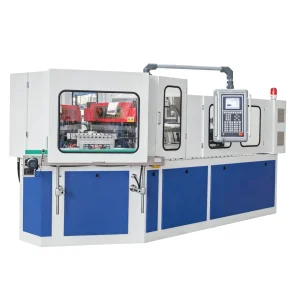
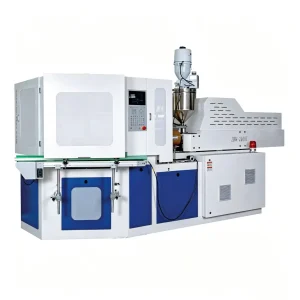
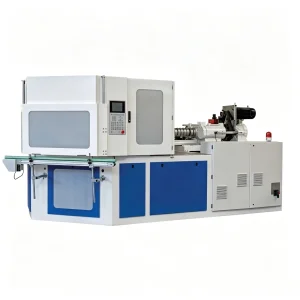
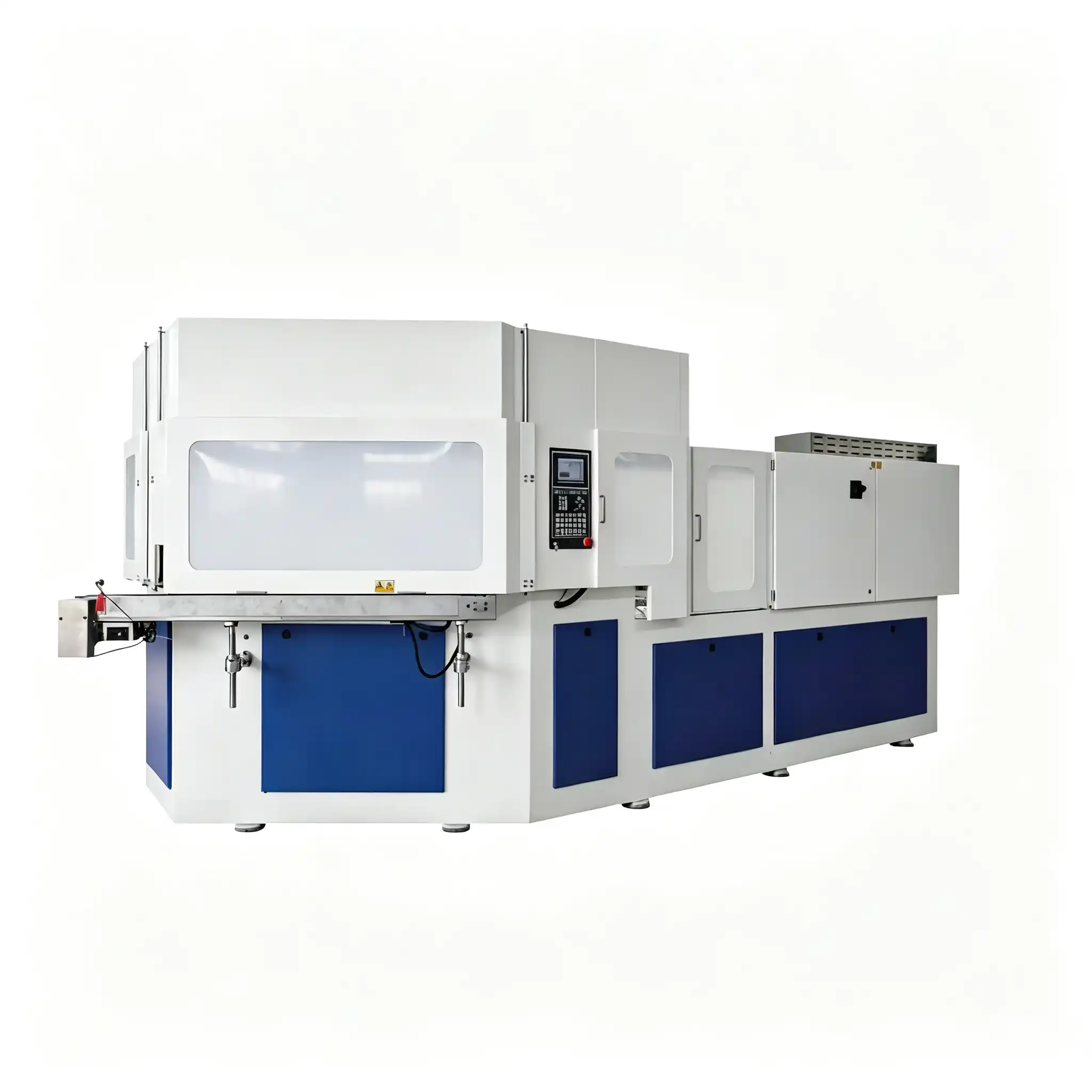
ZQ135 Injection Blow Moulding Machine — 135-Ton European Platform for High-Cavitation Production
The ZQ135 is Zi-Qiang’s flagship injection blow moulding machine, built on a full European-style frame with a 1,350 KN injection clamping force. At 135 tons, it occupies the upper tier of the injection blow moulding market — the same class as the Jomar IBM175, SUMA 175iB, and Uniloy UIB180 — while delivering a larger platen (1,300 × 500 mm), higher injection weight (650 g), and a more compact 5.5 × 2 × 2.4 M footprint.
With a 4-second dry cycle and an operating power ratio of 52%–70%, the ZQ135 supports 24-hour continuous runs across pharmaceutical, cosmetics, food, and personal care bottle lines. The dual hydraulic system (37 + 37 KW) keeps total installed power at 95 KW — meaning energy costs stay predictable even at the highest cavitation levels the machine can achieve.
Full Technical Specifications — ZQ135 Injection Blow Moulding Machine
| Parameter | Unit | ZQ135 |
|---|---|---|
| Injection System | ||
| Screw Diameter | mm | 70 |
| Screw L/D | — | 22:1 |
| Injection Weight | g | 650 |
| Heating Power | KW | 30 |
| Number of Barrel Zones | — | 6+N |
| Injection Stroke | mm | 200 |
| Clamping System | ||
| Clamping Force — Injection | KN | 1,350 |
| Opening Stroke — Injection | mm | 140 |
| Clamping Force — Blowing | KN | 200 |
| Opening Stroke — Blowing | mm | 140 |
| Lifting Height of Rotary Table | mm | 70 |
| Mould | ||
| Max. Platen Size (L×W) | mm | 1,300 × 500 |
| Mold Thickness | mm | 280 |
| Max. Bottle Diameter | mm | 120 |
| Bottle Height | mm | 220 |
| Suitable Bottle Height Range | mm | 1–2,000 |
| Stripping Stroke | mm | 280 |
| Hydraulic System | ||
| Hydraulic Pressure | MPa | 14 |
| Motor Power | KW | 37 + 37 |
| Dry Cycle | s | 4 |
| Total Power | KW | 95 |
| Operating Power Ratio | % | 52–70 |
| Others | ||
| Min. Compressed Air Pressure | MPa | 0.7–1.2 |
| Compressed Air Capacity | M³/min | 0.7 |
| Water Flowage | M³/h | 4 |
| Cooling Water Pressure | MPa | 0.3–0.4 |
| Machine Dimensions (L×W×H) | M | 5.5 × 2 × 2.4 |
| Net Weight | Ton | 18 |
Mold Cavitation Reference — ZQ135 Injection Blow Moulding Machine
Max cavity counts by container volume (reference only; final cavitation confirmed by mold supplier):
| Volume | 10 ml | 30 ml | 60 ml | 100 ml | 250 ml | 500 ml | 1,000 ml |
|---|---|---|---|---|---|---|---|
| Max Cavities | 30 | 26 | 22 | 18 | 14 | 10 | 8 |
What Makes This Injection Blow Moulding Machine Different
- 1
1,350 KN Injection Clamping — 20%–30% Above Industry Norm. The European booster-cylinder design decouples clamping force from the open/close motion, so the ZQ135 generates the highest clamping force per hydraulic kilowatt of any machine in its size class. This directly reduces flash rates and extends mold service life at high cavitation.
- 2
High-Precision Angle Divider with Synchronized Open/Close and Turret Lifting. The standard high-precision angle divider on the ZQ135 achieves full mechanical synchronization of all three turret motions — opening, closing, and lifting — in a single coordinated stroke. This eliminates preform registration errors that cause bottle neck defects and cavity-to-cavity weight variation.
- 3
30-Cavity Small-Bottle Throughput at 10 ml. With up to 30 cavities for 10 ml containers and up to 8 cavities at 1,000 ml, the ZQ135 covers the widest bottle-size range of any machine in the Zi-Qiang lineup — making it the right choice for multi-SKU production operations.
- 4
Dual Hydraulic System — Standard, Not Optional. The ZQ135 ships with a twin 37 KW hydraulic system as standard equipment. Hydraulic double-circuit architecture reduces operating energy consumption by 20%–30% compared to single-pump machines, while the standard configuration eliminates field-retrofit complexity and warranty gaps.
- 5
Zero Preform Scrap — One-Step Injection Blow Moulding. The three-station simultaneous cycle (inject → blow → strip) means the ZQ135 never produces orphaned preforms. Material utilization is effectively 100%, with no regrind loop required — a critical factor for converters processing engineering resins above $5/kg.
Industries Served by the ZQ135 Injection Blow Moulding Machine
Pharmaceutical
Eye-drop bottles, syrups, oral-solid containers — up to 30 cavities at 10 ml for high-output GMP-compliant pharma lines. The bottom-up hydraulic layout prevents oil contamination of the mold zone.
Cosmetics & Personal Care
Perfume bottles, lotion dispensers, serum vials — the high clamping force maintains wall-thickness uniformity in complex geometry bottles that low-tonnage machines cannot hold.
Food & Dairy
Milk bottles, condiment containers, and juice packaging in HDPE, PP, or PC — with neck-finish precision tight enough to guarantee hermetic cap sealing from cavity to cavity.
Nutraceuticals & Healthcare
Vitamin supplement bottles, protein powder jars, and medical device packaging where HDPE, PP, and PETG are blended to specific clarity and impact requirements.
Injection Blow Moulding Machine Comparison — ZQ135 vs. Global Equivalents
Use this table to identify equivalent models when replacing or upgrading existing injection blow moulding equipment. (Third-party brand names appear in italics for reference only and do not imply any commercial relationship with Zi-Qiang Machinery.)
| Parameter | ZQ135 Zi-Qiang |
IBM175 Jomar |
175 iB SUMA |
UIB180 Uniloy |
|---|---|---|---|---|
| Clamping Class | 135T / 1,350 KN | 175T / 1,560 KN | 175T / 1,600 KN | 180T |
| Screw Diameter (mm) | 70 | 70 | 65 / 76 | — |
| Injection Weight (g) | 650 | 450 / 550 | 580 / 770 | — |
| Inj. Clamping Force (KN) | 1,350 | 1,560 | 1,600 | — |
| Platen Size (mm) | 1,300 × 500 | 635 × 1,372 | 1,200 × 600 | — |
| Machine Footprint (M) | 5.5 × 2 × 2.4 | 4.22 × 2.67 × 3.58 | 6 × 2.6 × 2.7 | — |
| Max Cavities at 10 ml | 30 | — | — | — |
FAQ — ZQ135 Injection Blow Moulding Machine
Q: What bottle sizes can the ZQ135 injection blow moulding machine produce?
The ZQ135 handles containers from 1 ml to 2,000 ml in height, with bottle diameters up to 120 mm. Maximum cavity counts range from 30 (at 10 ml) down to 8 (at 1,000 ml), making this machine well-suited for facilities that run a wide range of container sizes on the same platform.
Q: How does the European-style injection blow moulding machine differ from an Asian-style machine?
European-style machines use a pressurized booster clamping structure where the booster cylinder is isolated from the open/close motion. This produces 20%–30% greater clamping force at identical hydraulic pressure settings, reduces mechanical wear on the main cylinder, and allows the machine to run a hydraulic double-system as standard — all of which extend service intervals and reduce long-term maintenance costs versus Asian single-cylinder designs.
Q: Can the ZQ135 replace a Jomar IBM175 or SUMA 175iB in an existing line?
For most applications, yes. The ZQ135 is classed in the same 135–175 ton tier as the Jomar IBM175 and SUMA 175iB. The ZQ135 carries a larger platen (1,300 × 500 mm vs. 635 × 1,372 mm for the Jomar), a higher per-shot injection weight (650 g), and a more compact footprint (5.5 × 2 × 2.4 M vs. 4.22 × 2.67 × 3.58 M for the Jomar). Mold tooling compatibility should be verified cavity-by-cavity with your toolmaker.
Q: What resins are compatible with the ZQ135 injection blow moulding machine?
PP, HDPE, LDPE, PS, PET, PETG, PC, PEN, PMMA, and SAN are all processable on the standard screw configuration. The 6+N barrel zone layout allows precise thermal profiling for high-viscosity or engineering-grade resins without additional hardware.
Q: What after-sales support is available for Australia buyers?
Zi-Qiang provides pre-shipment FAT documentation, on-site installation supervision, structured operator training, and a 24/7 remote technical support channel. Critical wear parts (seals, screw tips, valve blocks) are stocked for air-freight dispatch, with typical delivery to major Australia logistics hubs within 3–5 business days.
Specify Your ZQ135 Injection Blow Moulding Machine Today
Tell us your target container volume, resin, and daily output requirement — our team will calculate exact cavitation, cycle time, and energy cost per 1,000 bottles within 48 hours.